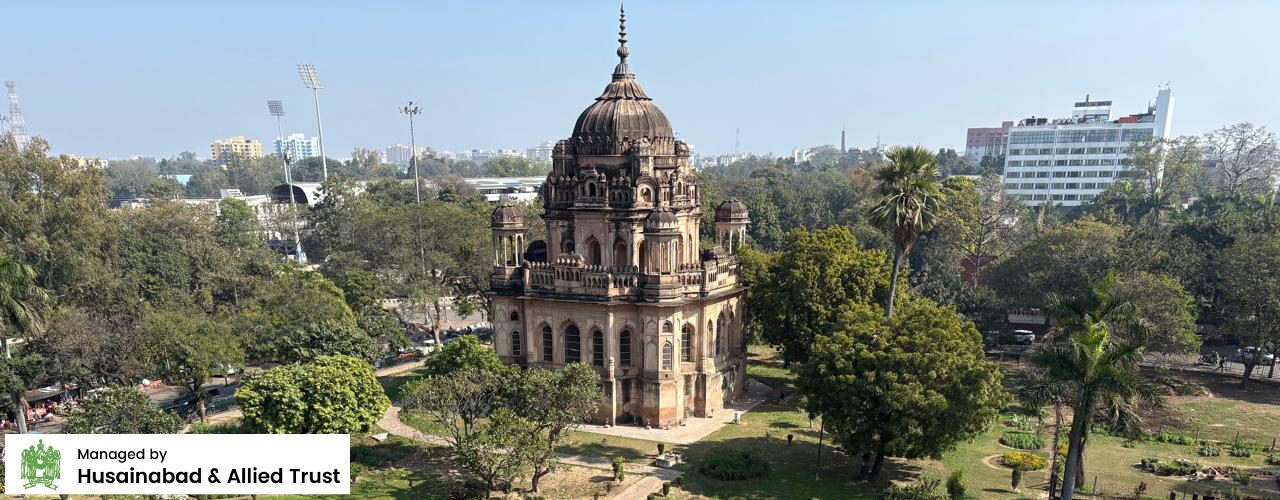
The structure popularly known today as the Picture Gallery is, in fact, something far more layered and historically significant than its name suggests. The term Picture Gallery is a misnomer, as the gallery occupies only a small portion of a much larger architectural complex built during the reign of Muhammad Ali Shah, the third King of Awadh.
Originally constructed as a Baradari, this double-storied building was part of the larger vision that transformed Hussainabad into one of the most refined and planned quarters of nineteenth-century Lucknow.
The Baradari and Its Setting
Contemporary accounts refer to the structure simply as a Baradari, a pavilion traditionally used for leisure, gatherings, and ceremonial functions. About a year after its completion, around 1839, a large water tank (Talab) was constructed in front of the Baradari, enhancing both the visual symmetry and climatic comfort of the complex.
At the corners of the Talab, a small mosque and a matching hammam were built, reinforcing the balance between spiritual, functional, and aesthetic elements that characterised Nawabi planning.
In front of the Baradari, the King also established a Sarai and a Meena Bazaar, integrating commerce and hospitality into the area. To support royal processions and courtly life, a Feelkhana (elephant stable) and an Astabal (horse stable) were constructed nearby.

Architectural Innovation
One of the most notable features of the Hussainabad Baradari is its use of iron pillars in the upper-storey pavilion facing the Talab. This was the first recorded use of iron pillars in Nawabi architecture, marking an important moment of architectural innovation and experimentation in Awadh.
Such use of new materials reflects Muhammad Ali Shah’s openness to contemporary ideas and his willingness to blend traditional forms with emerging construction techniques.
Leisure and Social Life
The cultural life of the Baradari extended beyond architecture. Close to the building, Muhammad Ali Shah constructed a Gendghar, or bowling alley, specifically for the amusement of his British guests. This structure highlights the evolving social interactions between the Awadh court and colonial officials during this period.
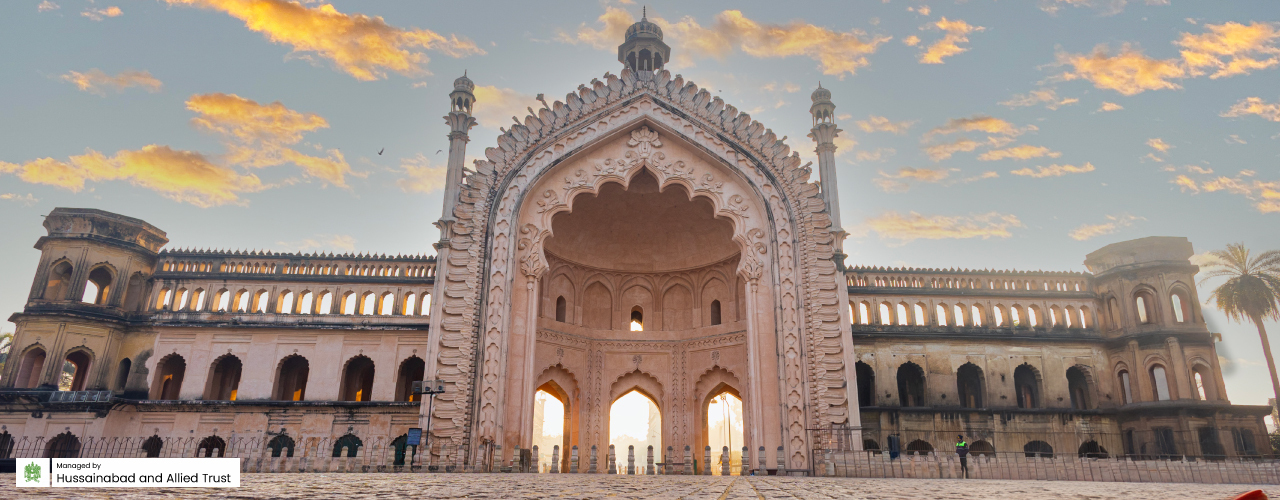
In fact, the credit for the inception and development of Hussainabad earlier known as Jamaniya Bagh due to its enclosed garden largely belongs to Muhammad Ali Shah. As part of this grand scheme, he also commissioned a metal door connecting the two Imambaras between Rumi Gate and the Hussainabad Gateway, reinforcing the ceremonial axis of the area.

From Baradari to Picture Gallery
Following the annexation of Awadh, the Baradari entered a new phase of use. For a period, it was known as Taluqdars, after being handed over by the British to the Anjuman of Taluqdars of Awadh.
Later, the building was repurposed as a Picture Gallery, a role that gave it its present name. Between 1882 and 1885, large full-length oil portraits of the Nawabs of Awadh were commissioned and painted by visiting European artists. These portraits, displayed within the gallery, offered a visual record of the Nawabi lineage through a colonial artistic lens.
A Living Record of Transitions
Today, the Picture Gallery stands not merely as an exhibition space, but as a document of transition from Nawabi leisure pavilion to colonial assembly hall, and finally to a gallery of visual memory.

BARA IMAMBARA is closed on Fridays from 10 AM to 3 PM, while all other monuments and tourist places in Lucknow are open from sunrise to sunset, i.e., from 6 AM to 6 PM.
BARA IMAMBARA is a dynamic structure whose beauty changes with the sunlight throughout the day, so technically you can visit at any time of the day.
However, most tourists prefer sunrise as the monument looks like a blooming flower when the morning light bathes it in a rosy hue. Also, visiting early in the morning allows you to avoid both the heat and the crowds during the summer months. For those who want to take some perfect shots and don't want to wait in long queues, getting up early can be very beneficial.
However, visiting at sunset is also a good option. The temperature cools down and the monument is bathed in a soft, silvery light. There are usually more visitors at sunset than at sunrise. Patience is required to get some good pictures.
Day visit pass can be purchased online through the official website or at the pass windows located at both gates. The best time to visit is from October to March.
No
No, Bhool Bhulaiya is a part of Bara Imambara.
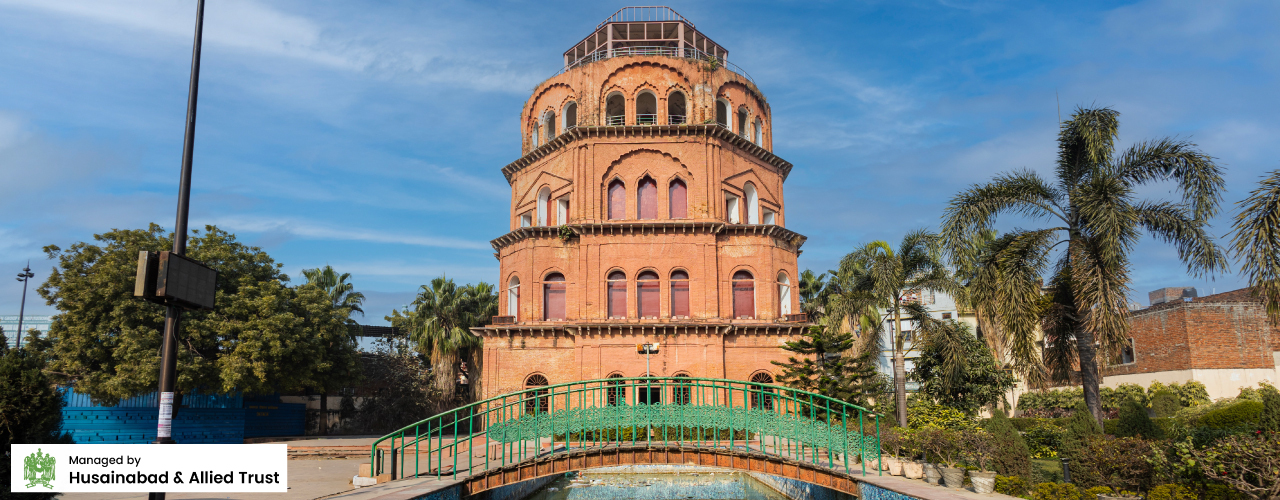
Lucknow is full of tourism possibilities for tourists. It contains five World Heritage Sites: Bara Imambara (Bhul Bhulaiya/Baoli), Chota Imambara, Picture Gallery, and Satkhanda. Visitors can explore Ambedkar Memorial Park, the Residency, Saadat Ali Khan Mausoleum, Dilkusha Kothi, Janeshwar Mishra Park, Nawab Wajid Ali Shah Zoological Garden, and Gomti Riverfront Park.
Any kind of shooting is prohibited in the Imambara premises, it can be done on the road outside the Imambara only after permission from the Police/District Magistrate/Chairman Husainabad and Allied Trust Lucknow.
No, Bara Imambara is a religious place, hence cultural programs are prohibited in the Imambara.
Powered by

© 2026 Getepay. All rights reserved